Dive into 'American Dream' (1990), a gripping documentary exploring the resilience of striking workers and their families. This powerful film showcases a community's fight for their livelihood and a piece of the American Dream amidst economic challenges. Witness the enduring human spirit and profound search for hope in this acclaimed true story.
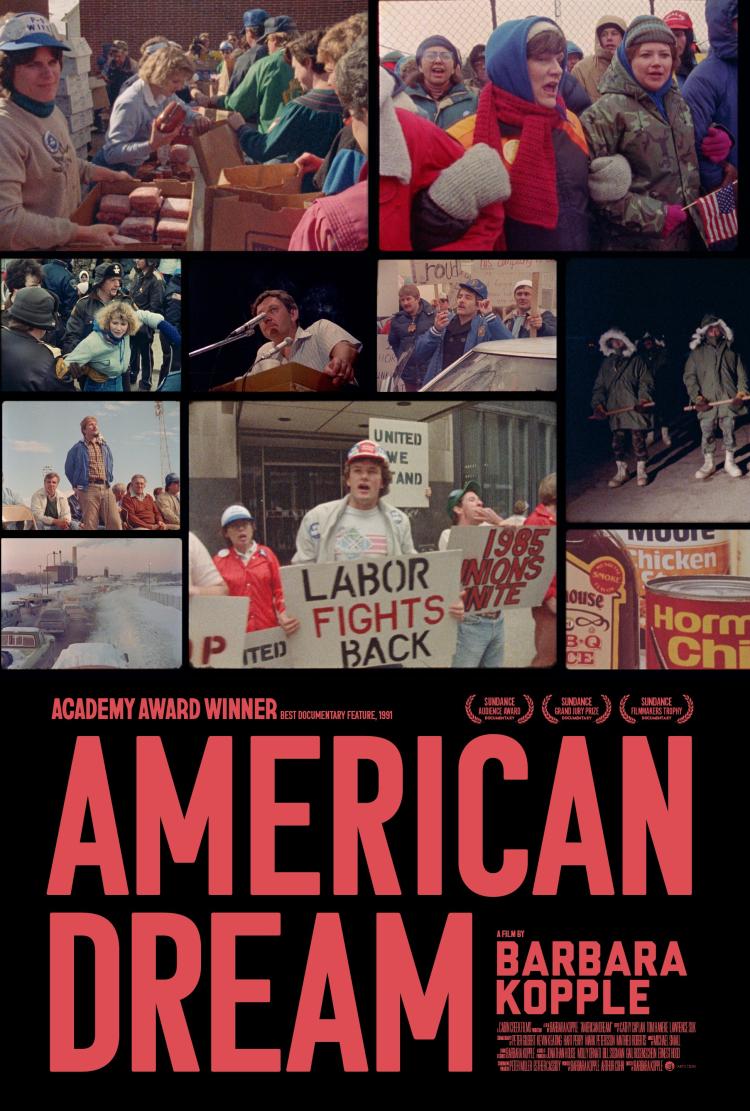
American Dream
Runtime: 1 Hours 40 Minutes
Audience Rating: 9.0/10
Critics Rating: 10.0/10
Genre: Documentary
Rating: PG-13
Release Date: 18 March 1990
Original Language: English
Production House: Cabin Creek
Distributor: Miramax Films, Home Vision Entertainment and Homegreen Films
Page Last Updated On: 28 May 2026
About:
Review:
Review: American Dream (1990)
1. Introduction
Have you ever wondered what happens when the very idea of "making a living" clashes with the changing landscape of big business? That's exactly the kind of question 'American Dream,' a powerful documentary from 1990, dives into headfirst. Even though it's over thirty years old, this film feels incredibly relevant today, offering a raw and honest look at a pivotal moment in American labor history. Directed by Barbara Kopple, who also gave us the unforgettable 'Harlan County U.S.A.,' this movie isn't just a history lesson; it's a deeply human story about people fighting for their livelihoods and their dignity. If you're looking for a film that truly makes you think about work, fairness, and the sometimes-harsh realities of the economy, 'American Dream' is definitely one to consider.
2. Story Overview
'American Dream' takes us back to the mid-1980s, right into the heart of Austin, Minnesota, a small town heavily reliant on the Hormel Foods plant. The film meticulously chronicles the bitter 1985-1986 strike by Local P-9 of the United Food and Commercial Workers International Union against Hormel. The core of the conflict was simple, yet devastating: Hormel wanted significant wage and benefit cuts, claiming they needed to stay competitive. The local union, P-9, led by the fiery Jim Guyette, felt they were being asked to sacrifice too much, especially after years of profitability for the company.
What makes the story so compelling, and ultimately heartbreaking, is the way it shows the strike fracturing not just the town, but also the union itself. The national UFCW union disagreed with P-9's approach, eventually ordering them back to work and creating an agonizing split. We see picket lines, heated negotiations, desperate workers trying to get by, and the increasing tension as replacement workers are brought in. It’s a real-life David-and-Goliath struggle, but with layers of complexity that make it far from a clear-cut good-vs-evil narrative.
3. Main Characters & Performances
Since 'American Dream' is a documentary, we're not talking about actors performing roles, but real people living through an incredibly difficult period. And honestly, their authenticity is what makes this film so captivating. The camera focuses largely on the striking workers and their families, particularly the members of Local P-9. We see their hopes, their fears, their anger, and their unwavering resolve.
Jim Guyette, the president of Local P-9, stands out as a central figure. He’s charismatic and deeply committed to his members, fighting tooth and nail against both the company and, eventually, his own national union. You truly get a sense of the immense pressure on his shoulders. Beyond Guyette, the film introduces us to various rank-and-file workers—men and women whose faces tell stories of decades of hard work and now, profound uncertainty. Their interviews are raw, emotional, and often heartbreaking. You feel their frustration as they describe struggling to put food on the table, their dignity bruised, and their community fraying. While the film doesn't delve deeply into the motivations of Hormel management, it does give glimpses of their perspective through statements and news clips, which adds a necessary, if brief, counterpoint to the workers' struggles.
4. What Works Well
So many things make 'American Dream' a powerful and enduring watch. First off, Barbara Kopple's access is simply incredible. She and her crew were right there in the thick of it, capturing intimate moments on the picket line, in union halls, and in workers' homes. This direct access gives the film an unparalleled sense of immediacy and truth.
What truly shines through is the human element. The film does an exceptional job of showing the personal toll of the strike: families breaking apart, financial ruin, and the emotional exhaustion of prolonged conflict. It’s impossible not to feel empathy for these individuals, regardless of where you stand on labor disputes. The way it portrays the division within the union, and how that complicates the struggle, is also a fascinating and tragic aspect of the narrative. It’s not just a fight against the company; it’s a fight for identity and unity. Furthermore, the film’s meticulous editing weaves together archival footage, news reports, and current interviews to create a cohesive and deeply impactful story. It never feels preachy, but rather presents the unfolding events and lets you draw your own conclusions.
5. What Could Be Improved
While 'American Dream' is a fantastic film, there are a couple of small points worth mentioning. Because the film largely focuses on the P-9 workers' perspective, which is understandable given the narrative and access, a slightly more in-depth exploration of Hormel's side might have added even more layers of complexity. We hear their public statements, but we don't get the same intimate look at their boardroom decisions or the pressures they felt. That said, getting that kind of access for a film like this is incredibly difficult, so it's a minor point.
Also, for viewers who might not be deeply invested in labor history, the pacing can feel a little slow at times. It’s a very detailed chronicle, and while that’s one of its strengths, some audiences might find themselves wishing for a slightly tighter narrative in certain segments. But honestly, these are small quibbles for a film that otherwise delivers such a profound and impactful experience.
6. Overall Entertainment Value
Is 'American Dream' "entertaining" in the traditional sense of popcorn movies? No, not really. It’s not a laugh-out-loud comedy or a thrilling action flick. However, it is profoundly engaging and incredibly thought-provoking. It grips you with its raw emotion and keeps you glued to the screen as you witness the escalating drama and personal stakes.
For anyone interested in American history, economic justice, workers' rights, or simply compelling human stories, this film has immense value. It educates, it provokes discussion, and it challenges viewers to consider the real cost of economic change and corporate decisions. You'll leave the film with a lot to ponder, from the meaning of loyalty to the fragile balance between capital and labor. It's a powerful experience that resonates long after the credits roll, making it a very worthwhile watch for those seeking something with substance.
7. Final Verdict
'American Dream' is more than just a documentary; it's a vital piece of American history captured on film. Barbara Kopple once again proves her mastery of the form, delivering a deeply personal and unflinching look at a conflict that shook a community and exposed deep divisions in the national conversation about work and wealth. It’s a story of courage, desperation, and the harsh realities faced by working-class Americans when the "American Dream" starts to feel out of reach.
I wholeheartedly recommend 'American Dream.' It might be from 1990, but its themes of economic insecurity, union struggles, and the fight for a fair shake are just as relevant today. It's a testament to the resilience of ordinary people and a stark reminder of the complexities inherent in our economic system. Go watch it; you won't just be entertained, you'll be moved and, quite possibly, enlightened.