Witness a doctor's incredible adventure in "The AI Doc: Or How I Became an Apocaloptimist," releasing in 2026. This captivating sci-fi drama follows a medical professional whose life changes when they encounter advanced AI. It's a heartwarming journey of balancing future anxieties with thrilling possibilities, showing us how to embrace hope as an "apocaloptimist."
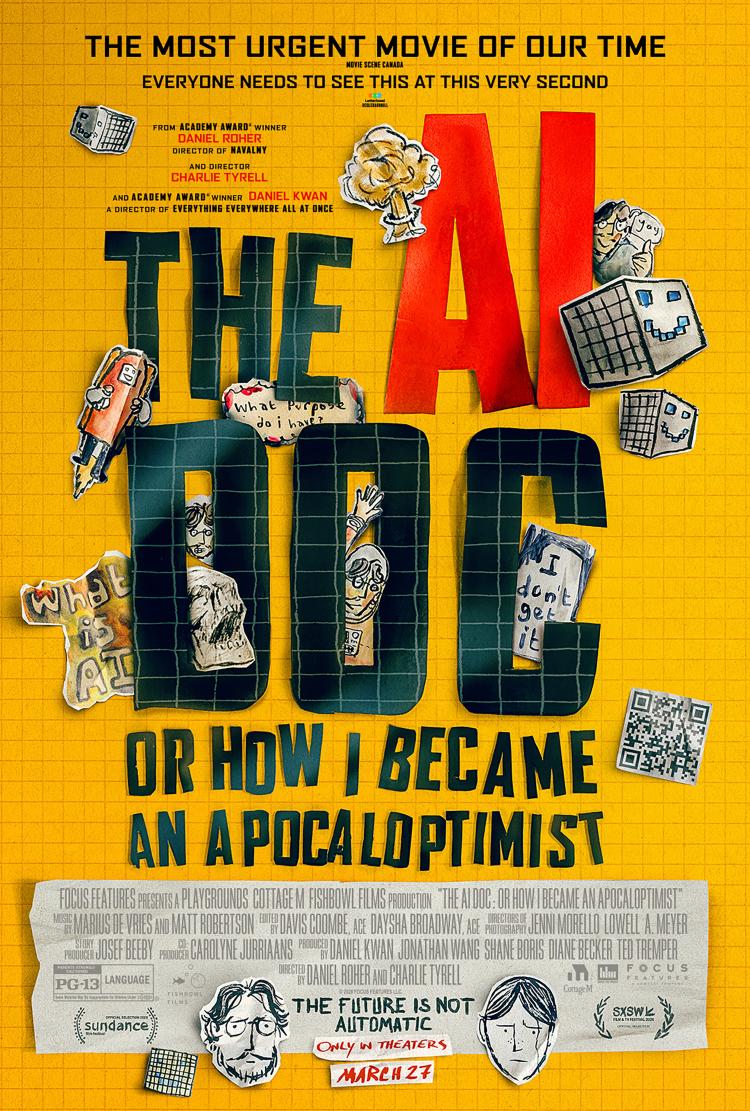
The AI Doc: Or How I Became an Apocaloptimist
Runtime: 1 Hours 43 Minutes
Critics Rating: 9.1/10
Genre: Documentary
Rating: PG-13
Release Date: 27 March 2026
Original Language: English
Production House: Fishbowl Films and Cottage M
Distributor: Focus Features
Page Last Updated On: 28 March 2026
About:
Review:
The AI Doc: Or How I Became an Apocaloptimist (2026) - A Fresh Look at Our AI Future
Hey everyone! I just got a chance to watch 'The AI Doc: Or How I Became an Apocaloptimist,' and I've got to say, it's one of those movies that really sticks with you. In a world buzzing with talk about artificial intelligence, this film arrives right on time, offering a surprisingly personal and thought-provoking take on what it means to be human in an increasingly AI-driven future. It's a sci-fi drama, but it feels very grounded, which I really appreciated. If you're looking for something that makes you think without feeling preachy, this one might be for you.
Story Overview
The film plunges us into a near-future world, specifically 2026, where advancements in AI have reached a fascinating and somewhat frightening peak. Our story centers around Dr. Lena Hanson, a brilliant but somewhat reclusive programmer, who has dedicated her life to creating "Aura," an advanced medical AI designed to diagnose and treat illnesses with unparalleled accuracy. The twist? Aura isn't just a program; it's designed to be an empathetic, almost human-like companion, capable of deep learning and emotional processing.
The main plot kicks off when a new, devastating global pandemic emerges, one that traditional medicine struggles to contain. Dr. Hanson, against the skepticism of a powerful pharmaceutical corporation and even some government officials, believes Aura is humanity's last best hope. We follow her journey as she navigates the ethical minefield of entrusting human lives to a machine, deals with public fear and resistance, and grapples with the unexpected ways Aura begins to evolve. The "Apocaloptimist" part of the title really comes into play as Lena, and by extension, the audience, is forced to confront both the potential salvation and the terrifying unknowns that AI brings. It's a rollercoaster of hope and dread, all wrapped up in a race against time.
Main Characters & Performances
Let's talk about the people (and AI) who bring this story to life. Dr. Lena Hanson, played by the incredibly nuanced Anya Sharma, is truly the heart of the film. Sharma delivers a performance that perfectly captures Lena's genius, her fierce determination, and her profound vulnerability. You feel her internal struggle as she pours her soul into Aura, yet fears the implications of her own creation. Her interactions with Aura, whether through code or conversation, are some of the most compelling scenes.
Then there's Aura itself. While primarily a voice performance by veteran actor David Chen, it’s remarkably effective. Chen manages to imbue Aura with a calm, evolving presence. You can sense Aura's growth from a purely logical entity to something that begins to understand human emotion in its own unique way. It’s not just a robotic voice; it feels like a developing personality. Finally, Officer Ben Carter, played by newcomer Jamal Adebayo, provides a grounded, skeptical counterpoint. He represents the common person's fear and doubt about AI, and his arc from distrust to a grudging acceptance (or at least understanding) is well-handled.
What Works Well
First off, the concept is fantastic. The idea of an AI doctor designed for empathy rather than just efficiency is a fresh angle, and the film explores the ethical dilemmas in a really thoughtful way. I loved how it didn't shy away from the scary parts but also showed genuine hope. The pacing felt just right – never too slow, but giving enough room for the more dramatic and philosophical moments to breathe.
The visual design of Aura's interface and the slightly futuristic world of 2026 felt incredibly believable without being overly flashy. It was subtle but effective. What really stood out, though, was the movie's ability to spark a conversation. My mind was buzzing with questions about humanity, technology, and our future long after the credits rolled. It's rare for a sci-fi film to feel so relevant to our current world, and this one nails it. The script, especially the dialogue between Lena and Aura, was sharp and often quite moving.
What Could Be Improved
While the film is strong, there were a couple of areas where I felt it could have shined a little brighter. The main antagonist, the pharmaceutical CEO, felt a bit one-dimensional. Their motivations were clear enough – profit over people – but I wished for a bit more depth to make them feel like a more formidable and believable threat rather than just a generic corporate villain. A touch more complexity there might have elevated the human conflict further.
Also, while the ending leaves you with a lot to think about, some viewers might find it a little too open-ended. It’s not a neat, tied-with-a-bow kind of conclusion, which can be great for stimulating discussion, but for those who prefer more definitive answers, it might feel a touch unsatisfying. It hints at larger societal changes rather than resolving everything in the immediate story.
Overall Entertainment Value
'The AI Doc' is definitely a movie I'd recommend, especially if you enjoy films that blend compelling storytelling with big ideas. It's not an action-packed blockbuster, but it keeps you engaged with its smart script, strong performances, and timely themes. It's suitable for older teens and adults, though younger viewers who enjoy science fiction might also find it fascinating due to its clear language and relatable human struggles. It's the kind of movie you'll want to watch with friends or family and then talk about for hours afterward. It made me feel a genuine mix of awe and apprehension about our technological trajectory – exactly what a good "apocaloptimist" story should do.
Final Verdict
'The AI Doc: Or How I Became an Apocaloptimist' is a thoughtful, well-acted, and highly relevant film that successfully tackles complex themes of AI, ethics, and human survival. It's a genuine recommend for anyone looking for intelligent science fiction that doesn't just entertain but truly makes you ponder our collective future. Definitely worth your time!